Our multi-decade search for a practical, scientifically-based model for lasting inner transformation is what led us to discovering the life-changing power of the hypnagogic state. Fascinated by the prospect of shaping our world through changing our internal one, we looked to historical and empirical evidence, digesting all available scientific literature, creating our own hypotheses, and experimenting on ourselves, our friends, and our family. This is how the initial Elsewhere protocol was born. We have come a long way since then and are humbled and grateful that this neuroscientific framework for personal transformation has resonated so deeply with so many, creating wide-reaching ripples throughout self-help circles around the world. We thank each and every one of you for sharing your feedback and experience. Receiving them has been the joy of a lifetime! Thank you for following our journey, and as always if you have any questions, please reach out. We absolutely love sharing the science of Elsewhere. -Eugiene + Teresa
The Three Principles of Neuroplastic Change
At the onset of our research we identified three core components for an inner breakthrough. We concluded that any framework for positive change that relies solely on imagination or visualization is fundamentally incomplete. It omits the most critical variable in the neurobiology of memory and belief formation: emotion. An imagined scenario, devoid of genuine feeling, is akin to a detailed architectural blueprint without a construction crew; the plan exists in a transient form, but the enduring structure is never built. From a neurological perspective, the brain does not and cannot afford to store every piece of information it encounters. It employs a sophisticated filtering system to determine what warrants the energetically expensive process of long-term consolidation, and the primary criterion for this filter is emotional significance.
Lasting, self-directed neuroplasticity is contingent upon a tripartite mechanism. The first component is Emotional Salience, the process by which an experience is "tagged" by the brain's emotional centers as significant and worthy of preservation. The second is Repetition, the biophysical process that strengthens the neural pathways corresponding to a thought or belief, physically embedding it into the brain's architecture. The third is State-Dependent Learning, which posits that this process is most effective when conducted in a neurobiological state optimally receptive to change.
It is during the hypnogogic state, we found, that a unique confluence of these three elements emerges, creating an ideal window for reprogramming the self. To arrive at this conclusion we first needed to deconstruct the foundational neurobiology of emotional memory and the mechanisms of repetition. We then explored the unique neurophysiological characteristics of the hypnagogic state that make it a uniquely powerful gateway for change. Finally, we synthesized these findings into a cohesive framework, demonstrating how a structured ritual can leverage these innate brain functions to transform an imagined ideal into an embodied reality. Welcome to the Science of Elsewhere.
How the Brain Prioritizes and Encodes Meaningful Experience
The formation of durable, meaningful memories is not the work of a single brain structure but rather a synergistic dialogue between two key regions within the medial temporal lobe: the hippocampus and the amygdala.
The Amygdala-Hippocampus Dialogue: A Synergy for Salient Memory
The hippocampus is primarily responsible for the formation of conscious, declarative memories, the explicit facts and context of an experience, such as the "what, where, and when." In contrast, the amygdala serves as the brain's principal center for processing emotional responses and forming the affective component of memories.
These two structures are not isolated; they are anatomically and functionally connected, engaging in crucial "cross-talk" during the memory consolidation process. Following a significant emotional event, both the amygdala and the hippocampus are activated. This dual activation and the dynamic interplay between them are what imbue emotionally charged memories with their characteristic vividness and persistence. This relationship is not static; the amygdala's influence on the hippocampus can change based on an individual's experiences, suggesting a dynamic learning system.
Clinical evidence from patients with localized brain damage provides a powerful illustration of this functional dissociation and necessary partnership. An individual with a damaged hippocampus but an intact amygdala can develop a conditioned physiological fear response to a neutral stimulus (e.g., a blue slide paired with a loud, unpleasant horn) but will be unable to explicitly recall which slide was associated with the aversive sound. Conversely, a patient with a damaged amygdala but a healthy hippocampus can verbally report the factual association that "the blue slide was followed by the horn" yet will exhibit no physiological fear response, such as a flinch or change in skin conductance. This demonstrates unequivocally that the feeling (an amygdala function) and the fact (a hippocampal function) are processed by distinct, yet interdependent, systems. For a complete, lasting emotional memory to form, both must work in concert.
Emotional Tagging and Memory Consolidation: Marking Memories for Keeps
The mechanism by which emotion exerts its powerful influence on memory is described by the "Emotional Tagging" hypothesis. According to this model, the amygdala, when activated by an emotionally arousing event, effectively places a biological "tag" on the corresponding memory trace being formed in the hippocampus. This tag serves as a crucial signal to the wider brain network, indicating that the associated information is of high importance, likely relevant to survival or well-being, and should therefore be prioritized for consolidation into long-term storage.
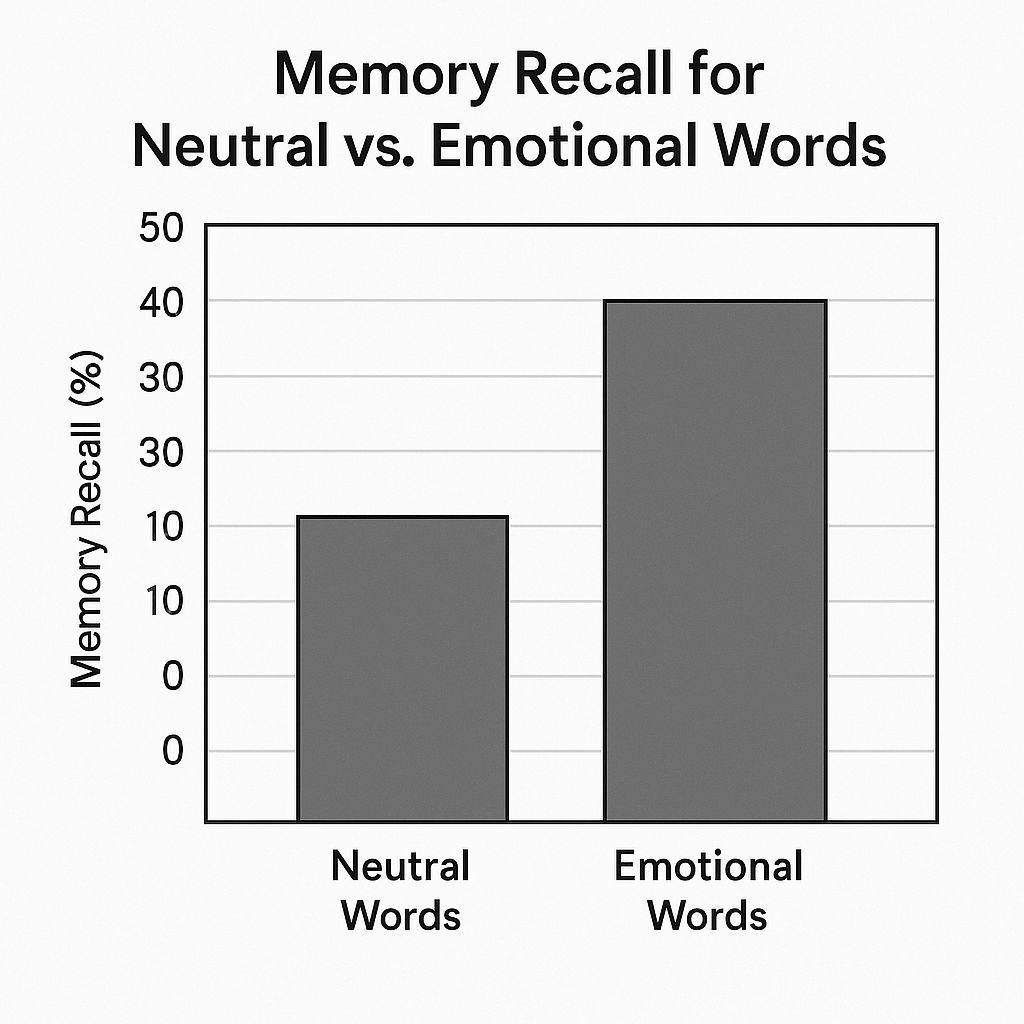
This process is an active modulation, not a passive one. The amygdala modulates memory-related processes in other brain regions, directly enhancing the neural plasticity and efficiency of information storage within the hippocampus and other target areas. Projections from the amygdala to the hippocampus are known to strengthen synaptic plasticity, which is the cellular basis of learning and memory. This modulation explains why emotionally salient stimuli are so much better remembered than neutral ones. Empirical studies have shown that words associated with high arousal or strong emotional valence (either positive or negative) are recalled with significantly higher probability and at greater speed than neutral words. This memory enhancement effect occurs automatically, even when the emotional content of the stimulus is not directly relevant to the memory task at hand, highlighting the powerful and obligatory nature of this emotional tagging system. An imagined scenario that fails to evoke a genuine emotional response will not trigger this tagging mechanism, leaving the memory trace unprioritized and destined to fade.
The Neurochemistry of Feeling
The process of emotional tagging is driven by a potent neurochemical cascade. An emotionally arousing experience triggers the release of stress hormones, such as epinephrine (adrenaline) and glucocorticoids (like cortisol), from the adrenal glands into the bloodstream, as well as the release of key neurotransmitters, such as norepinephrine, directly within the brain.
The amygdala functions as a critical integration hub for these diverse neurochemical signals. The effects of these circulating hormones and local neurotransmitters converge within the amygdala, leading to robust activation of its noradrenergic system. This neurochemically-fueled amygdala activation, in turn, powerfully modulates the consolidation of memories in its target regions, most notably the hippocampus. Seminal experiments have demonstrated this link; for instance, post-training systemic injections of epinephrine were found to significantly enhance long-term memory retention, an effect that was completely abolished in animals with a damaged or non-functioning amygdala. This neurochemical bath, initiated by an emotional experience and mediated by the amygdala, acts to "supercharge" the consolidation process for tagged memories, cementing the engram and making it exceptionally robust and resistant to decay.
"Neurons That Fire Together, Wire Together": The Unwavering Law of Repetition
In his seminal 1949 work, The Organization of Behavior, psychologist Donald Hebb proposed a principle that has become a cornerstone of modern neuroscience. The Hebbian postulate states: "When an axon of cell A is near enough to excite a cell B and repeatedly or persistently takes part in firing it, some growth process or metabolic change takes place in one or both cells such that A's efficiency, as one of the cells firing B, is increased". This concept is now famously summarized by the maxim, "neurons that fire together, wire together".
This principle explains how our experiences physically shape our brains. The process of strengthening synaptic connections through repeated co-activation leads to the formation of a "cell assembly," also known as an "engram". This engram is a distributed network of interconnected neurons that collectively represent a memory, a skill, a concept, or a belief. Once this assembly is formed, the activation of any part of the network facilitates the activation of the entire circuit, making the thought or behavior it represents easier to access and more automatic.
“This provides the direct neurophysiological explanation for how a belief, such as "I am ugly," transitions from a fleeting thought into a coherent, stable, and easily triggered mental construct.”
The Molecular Machinery of Belief Formation
Long-Term Potentiation (LTP) is the primary physiological mechanism that brings Hebb's Law to life. It is defined as a persistent, long-lasting strengthening of the communication efficiency, or synaptic efficacy, between two neurons following repeated, high-frequency stimulation. The molecular process underlying LTP is a sophisticated cascade involving specialized receptors on the postsynaptic neuron:
Initial Activation: A single, weak stimulation (e.g., a passing thought) causes the presynaptic neuron to release the neurotransmitter glutamate. This glutamate binds to AMPA receptors on the postsynaptic neuron, opening a channel that allows a small influx of sodium ions, causing a minor electrical depolarization. At this stage, another type of receptor, the NMDA receptor, remains blocked by a magnesium ion (Mg2+) and does not participate.
Repetitive Firing and Depolarization: Repeated and persistent stimulation (e.g., ruminating on a negative thought) causes a much larger and more sustained release of glutamate. This leads to a strong, prolonged depolarization of the postsynaptic neuron. This significant change in electrical charge is sufficient to physically expel the magnesium ion from the NMDA receptor's channel.
Calcium Influx: With the magnesium block removed, the NMDA receptor is now open. It acts as a gateway for a crucial second messenger: calcium ions (Ca2+), which flood into the postsynaptic cell.
Intracellular Cascade: This influx of calcium triggers a cascade of downstream biochemical reactions. It activates several enzymes, most notably calcium-calmodulin-dependent kinase II (CaMKII).
Synaptic Strengthening: The activated CaMKII brings about two critical changes that potentiate the synapse. First, it phosphorylates existing AMPA receptors, making them more sensitive and responsive to glutamate. Second, it promotes the insertion of additional AMPA receptors into the postsynaptic membrane. In some cases, this process can lead to changes in gene expression, resulting in long-term structural modifications to the neuron itself.
The cumulative result is that the synapse is now fundamentally altered and strengthened. The same presynaptic signal now elicits a much larger and more rapid postsynaptic response. The neural pathway has been physically reinforced, making the associated thought or belief easier to activate in the future.
The Power of the Negative: Why Chronic Self-Criticism Cements Negative Beliefs
According to renowned neuroscientist and Nobel Prize recipient, Dr. Eric Kandel, the neurobiological mechanisms of learning are fundamentally agnostic; LTP and Hebbian plasticity are indifferent to the psychological content of the information being processed. The brain's wiring machinery does not distinguish between a "positive" or "negative" thought; it responds only to the pattern and persistence of neural firing. A belief is not merely an abstract idea but a physical structure: a cell assembly built from neurons with strengthened synaptic interconnections.
When an individual repeatedly thinks, "I am ugly," or engages in any form of chronic negative self-talk, they are providing the precise high-frequency, persistent stimulation required to induce and sustain LTP in the neural circuits that represent that belief. Each repetition acts like another round of construction, reinforcing the synaptic connections within that specific "I am ugly" cell assembly. Over time, this neural pathway becomes a veritable superhighway in the brain, so efficient, well-established, and myelinated that the thought becomes automatic, intrusive, and feels incontrovertibly true. This process of neurological self-construction explains why such beliefs are so resistant to change; one cannot simply decide to demolish a deeply ingrained neural network. A new one must be built through an equally deliberate process of repetition. This also provides a basis for understanding how a deeply embodied belief can influence downstream physiology, affecting posture, hormone levels, and behavior, ultimately contributing to the very physical reality it represents.
Why Single Emotional Outbursts Don't Rewrite the Script
The slow, deliberate, and patterned process of LTP stands in stark contrast to the neurobiology of a sudden, intense emotional outburst. When a person experiences a fit of rage, the amygdala initiates a powerful "fight-or-flight" response, effectively hijacking the brain's executive resources. A critical consequence of this amygdala-driven state is the significant suppression of activity in the prefrontal cortex (PFC), the brain region responsible for rational thought, long-term planning, impulse control, and the integration of new information into one's self-concept. The brain shifts from a reflective, learning-oriented mode into a reactive, survival-oriented one.
A curse or negative declaration uttered in a moment of intense anger is a singular, explosive, and chaotic neural event. It lacks the essential characteristics of repeated and persistent patterned stimulation required to induce stable, long-term potentiation in cortical circuits and thereby form a new, lasting belief. The brain state is one of emotional dysregulation, not focused learning. While the memory of the event itself may be strongly encoded due to its high emotional salience (as per above), the semantic content of the outburst (e.g., "I curse my life!") is not integrated as a new core belief. The cortical machinery necessary for such complex belief updating is effectively offline, overridden by the limbic system's more primitive survival directives, except, as we will see, during or close to the hypnogogic state.
DANGER In the hypnogogic state, a highly emotional, negative statement or visual is replayed repeatedly (via rumination) while the logical, critical part of your brain is disengaged. Science proves the old adage: never go to bed angry.
Dimension
Normal Waking Consciousness
Acute Emotional Outburst (e.g., Anger)
Chronic Negative Self-Talk
Intentional Hypnogogic Reprogramming
Primary Brain Activity
Balanced Prefrontal Cortex (PFC) & Limbic System activity.
No stable LTP for belief formation; memory of the event may be strong, but the content is not integrated as belief.
Strong LTP in negative belief circuits; creation of a robust, automatic negative engram.
Optimal state for targeted LTP; high potential to weaken old pathways and create new, positive, emotionally-tagged engrams.
The Hypnogogic Gateway: The Optimal Neurobiological State for Reprogramming
Hypnagogia is the formal term for the transitional state of consciousness experienced between full wakefulness and the onset of sleep, corresponding roughly to NREM Stage 1 sleep. This state is defined by a unique constellation of subjective, behavioral, and electrophysiological characteristics that set it apart from both waking and deeper sleep stages.
Phenomenologically, hypnagogia is marked by the emergence of spontaneous and often vivid sensory experiences, which can be visual, auditory, or kinesthetic in nature. Unlike dreams, this imagery is typically static, fragmented, and lacks a coherent narrative structure. Cognitively, thought processes become radically different from ordinary waking consciousness. Logic loosens, giving way to a fluid and associative style of thinking. Ego boundaries are reported to dissolve, leading to heightened sensitivity, empathy, and a state of diffuse, absorbed attention. This cognitive fluidity is a critical feature, as it allows for the formation of novel, non-linear connections between ideas and feelings, creating a fertile ground for introducing new concepts.
Transient Hypofrontality: Bypassing the Critical Censor
A key neurobiological signature of the transition into sleep, as well as meditative and "flow" states, is a phenomenon known as "transient hypofrontality". This refers to a temporary, functional decrease in cerebral blood flow and metabolic activity in the prefrontal cortex (PFC). Positron Emission Tomography (PET) studies confirm a relative decrease in blood flow to the frontal cortex during Stage 1 sleep, the stage associated with hypnagogia.
“The PFC is the seat of our highest executive functions: rational analysis, critical judgment, long-term planning, and self-monitoring, including the "inner critic" that constantly evaluates incoming information against our existing belief structures.”
By temporarily down-regulating the PFC, the hypnogogic state effectively lowers this "critical faculty." This creates a precious window of opportunity where a new suggestion (e.g., "I am beautiful") can be introduced and entertained without being immediately analyzed, challenged, and rejected by the cognitive architecture that upholds an existing, contradictory belief (e.g., "I am ugly"). This state disarms the brain's natural skepticism and resistance to change.
The Critic Steps Aside
The persistent struggle many individuals face with personal transformation, despite journaling, meditation, and affirmations, is often misdiagnosed as a failure of willpower or commitment. Neuroscientific evidence, however, suggests the issue is not one of effort, but of biological timing and strategy. As mentioned above, the brain's prefrontal cortex (PFC), the seat of executive function, logic, and critical analysis, acts as a vigilant gatekeeper, defending the established identity and its associated belief systems. Attempting to install new beliefs during waking hours, when the PFC is at its peak operational strength, is akin to arguing with a guard whose primary function is to reject contradictory information. The process is inherently inefficient and often leads to frustration and abandonment of the desired change.
Hypnagogia offers a biological solution to this strategic problem. One of the defining neurological features of this state is hypofrontality, a temporary and natural reduction in the activity of the prefrontal cortex. As the brain transitions into the Alpha-Theta state, this critical "gatekeeper" effectively steps aside. The result is a profound shift in cognition characterized by a "loosening of ego boundaries," where the rigid sense of self softens, and a state of heightened suggestibility emerges. This shift corresponds with a reduction in activity in the prefrontal cortex, the analytical "gatekeeper" of the mind, which normally filters incoming information against a lifetime of established beliefs and conditioning. With this gatekeeper less active, the subconscious is more receptive to new input.
Research has consistently shown that in this state, the mind becomes uniquely receptive. Studies demonstrate that subjects are more suggestible to an experimenter's prompts and will readily incorporate external stimuli, such as sounds, into their internal trains of thought. This is not a state of gullibility, but rather one of openness. The analytical filter that would normally question, critique, or reject a new idea ("I am worthy," "I am abundant") is temporarily offline. The subconscious mind, therefore, becomes permeable, accepting incoming information more directly.
This reframes the user's past struggles not as a personal failing but as a strategic error born from a lack of understanding of the brain's operating system. The problem was never the user's lack of effort or the invalidity of their desires; it was a biological mismatch between the intent to change and the neurological state in which that change was attempted. By targeting this specific window of hypofrontality, it becomes possible to bypass the conscious mind's resistance and deliver new programming directly to the subconscious when it is most prepared to listen and accept.
A State of Peak Neuroplastic Potential
The combination of cognitive fluidity and transient hypofrontality culminates in a state of profound neuroplastic potential, as described extensively in the book, Hypnagogia: The Unique State of Consciousness Between Wakefulness and Sleep. Furthermore, Dr. Antonio R. Damasio, a neuroscientist at the University of Southern California, describes hypnagogia as being characterized by extreme suggestibility. During this period, the mind is exceptionally receptive to incorporating both external stimuli and internal suggestions into its ongoing stream of thought.
This heightened receptivity is paralleled by a crucial change in brainwave activity. The hypnogogic state is associated with the emergence of theta-band EEG rhythms. This is a finding of profound significance, as neurophysiological research has established that theta-burst stimulation is one of the most efficient and effective patterns for inducing long-term potentiation (LTP) in the hippocampus. Thus, as one enters hypnagogia, the brain naturally shifts into a physiological state that is optimally configured for strengthening synaptic connections. Furthermore, brain imaging shows that during this sleep-onset period, the brain is not idle but is actively processing the "day residue," according to research at University of Arizona, engaging a widespread network of cortical and subcortical structures, including the very hippocampal and emotional circuits necessary for memory consolidation.
Hypnagogia is therefore not merely a "relaxed" state. It is a unique and powerful convergence of neurobiological conditions that align perfectly to create an ideal window for therapeutic intervention. It simultaneously lowers the brain's critical defenses while priming its fundamental learning mechanisms, making it a naturally occurring "neuroplasticity super-state."
The Frequency of Effective Subconscious Reprogramming
Human brain activity, measured via electroencephalography (EEG), is categorized by frequency. During our active, problem-solving day, our brains are dominated by high-frequency Beta waves (above 13 Hz), associated with alertness, logic, and critical reasoning. As we relax, close our eyes, and disengage from external stimuli, our brainwaves slow into the Alpha range (8-13 Hz). This is a state of relaxed wakefulness, light meditation, and calm focus.
The hypnagogic state occurs as a bridge between this relaxed wakefulness and the first stage of sleep (N1 sleep). It is neurologically defined by a further slowing of brainwaves, where Alpha activity decreases and is gradually replaced by even slower Theta waves (4-8 Hz). Theta waves are profoundly important, as they are associated with drowsiness, deep meditation, REM sleep, heightened creativity, and intuitive insight. The hypnagogic state is therefore a unique synergy in neural activity, a "threshold consciousness" where one feels "half-asleep" yet is privy to a flow of non-linear, associative thought processes that are normally inaccessible. Physiologically, this transition is also marked by a lowered rate of frontalis muscle activity and changes in respiratory patterns, signaling a deep relaxation of the body. Furthermore, brain imaging shows that the Default Mode Network (DMN), a network of brain regions active during internal mentation, mind-wandering, and self-reflection, is also active during hypnagogia, suggesting a turn away from the external world and toward the landscape of the inner self.
This precise neurological environment, the shift from the analytical Beta mind to the receptive Alpha/Theta mind, is the biological foundation upon which effective subconscious reprogramming is built. It is not an anomaly but a predictable, daily occurrence.
Wave
Frequency (Hz)
Associated Mental State
Subjective Experience
Relevance to Limitless Protocol
Gamma
> 30 Hz
Peak focus, high-level information processing, intense concentration
"In the zone," heightened perception, binding of senses
The state of high performance the protocol ultimately aims to make more accessible in waking life.
Beta
13–30 Hz
Active thought, analytical problem-solving, focused external attention
Normal waking consciousness, conversation, working, "the daytime mind"
The "Before" state; the state of the critical mind that resists new programming.
Calm, peaceful, reflective, disengaged from stress
The initial phase of the Limitless session, signaling the beginning of the transition away from conscious resistance.
Theta
4–8 Hz
Deep relaxation, drowsiness, meditation, intuition, creativity, light sleep, REM
Daydreaming, dream-like imagery, free-flowing ideas, "the subconscious mind"
The primary target window for the Limitless protocol, where the mind is most receptive to new information and suggestion.
Delta
0.5–4 Hz
Deep, dreamless sleep, restorative processes
Unconscious, disconnected from physical awareness
The state where memory consolidation, including the reinforcement of patterns installed during the protocol, occurs.
The Blueprint of Being: Neurological Levers for Internal Change
Understanding the hypnagogic state as the gateway is the first step. The second is to understand the specific, scientifically validated mechanisms that can be activated within this state to architect lasting internal change. These are not speculative concepts but neurological levers with measurable effects on the brain and body. By systematically engaging these levers, it becomes possible to move beyond merely wishing for change to actively engineering it.
Rehearsing Reality: Motor Imagery, Neuroplasticity, and Embodied Cognition
The adage that "the brain cannot tell the difference between a vividly imagined experience and a real one" is often dismissed as self-help hyperbole. However, modern neuroscience has provided robust, quantifiable evidence that this is, on a fundamental level, true. The mechanism behind this is motor imagery, and its implications for personal transformation are profound.
Motor imagery is the mental simulation of a physical action without any overt body movement. Using functional magnetic resonance imaging (fMRI), researchers have demonstrated that when a person vividly imagines performing an action, such as tapping a finger, playing a piano, or swinging a golf club, their brain activates the very same neural circuits that would be engaged if they were physically performing the action. This activation is not vague or generalized; it is specific to the motor cortex, supplementary motor area, cerebellum, and basal ganglia, all regions critical for the planning, coordination, and execution of movement. The brain, in effect, runs a full dress rehearsal of the action, strengthening the neural pathways required to perform it in reality.
The most striking demonstration of this principle comes from a landmark study conducted by Dr. Guang H. Yue and his colleagues at the Cleveland Clinic Foundation. In this experiment, one group of participants engaged in "mental contractions" of their little finger abductor muscle for 15 minutes a day, five days a week, for 12 weeks. They performed no physical exercise. A second group did the same for their elbow flexor muscles. At the end of the 12-week period, the finger-abduction group had increased their physical strength by an average of 35%, while the elbow-flexion group increased theirs by 13.5%. A control group that did no training showed no change, and a group that performed actual physical exercises saw a 53% increase in strength.
The mechanism for this astonishing result was not muscle growth (hypertrophy), but neuroplasticity. The mental training did not change the muscles; it changed the brain. EEG recordings showed that the mental practice led to a significant enhancement of the cortical output signal: the electrical command sent from the brain to the muscles. The brain learned to send a stronger, more efficient signal, allowing the participants to recruit more of their existing muscle fibers and drive them to a higher level of activation. They became stronger because their brain became better at commanding their body.
This research moves visualization from a passive, abstract concept to an active, neurological training protocol. The key insight is that the brain responds most powerfully not to a static image of an outcome (e.g., a photo of a new house), but to an embodied, sensory-motor script of a process. The power lies in rehearsing the doing and feeling. This is why a protocol designed for transformation must guide the user through a first-person, multi-sensory experience: the feeling of calm authority while speaking, the scent of the air in a new city, the specific texture of a healthier body. By engaging in this neurological rehearsal nightly within the receptive hypnagogic state, the user is not just dreaming; they are building and reinforcing the neural architecture required to make that new reality their default state of being. The desired future becomes familiar and "pre-approved" by the nervous system, so that when the opportunity arises in waking life, the response is not hesitation, but automatic execution of a well-rehearsed script.
Installing New Memories: Targeted Memory Reactivation (TMR)
The transformative potential of a nightly protocol would be limited if its effects ceased the moment the session ended. The durability and compounding nature of this work are explained by another groundbreaking field of sleep science: Targeted Memory Reactivation (TMR). This process explains how the brain continues to work on our behalf, consolidating and reinforcing new patterns long after we have fallen into deep sleep.
TMR is a technique based on the fundamental discovery that the brain spontaneously "replays" or reactivates memories during sleep, a process critical for memory consolidation: the stabilization of new information and its integration into long-term storage. TMR leverages this natural process by intentionally triggering the reactivation of specific memories. The method is straightforward: during a waking learning session, a piece of information is paired with a distinct sensory cue, such as a specific sound or odor. Later, while the person is asleep, that same cue is quietly re-presented without waking them. This covert cueing triggers the brain to reactivate the associated memory, thereby strengthening it.
This technique has been shown to be effective across a wide range of memory domains. It can enhance declarative memory for facts and locations, improve procedural memory for learning new skills, and even be used to modulate the emotional tone of memories, for example, by reducing the arousal associated with negative stimuli. The process is most effective when the cues are presented during slow-wave sleep (NREM stages N2 and N3), the deepest stages of rest, and when the original memory is linked to emotionally significant information.
An important nuance of this process is that memory reactivation is not a perfect, verbatim "replay" of the original experience. Instead, the sleeping brain replays fragmented and reorganized traces of the memory, often mixing elements of the new experience with older, related memories. This is not a flaw in the system; it is the very mechanism of integration. True, deep learning is not about storing a new piece of data in an isolated folder; it is about weaving that new information into the vast, interconnected web of existing knowledge and identity.
This is precisely how a nightly recalibration protocol achieves deep and lasting change. The Elsewhere session, conducted in the hypnagogic state, pairs a new, desired identity-level belief (e.g., "I am worthy of success") with a rich set of auditory cues—a specific narrative arc, emotionally resonant music, and carefully designed soundscapes. TMR science demonstrates that once the user falls into deeper sleep, their brain will pick up where the session left off:
The "Tagging" in the Hypnagogic State: Think of your brain at the end of the day as having thousands of new files (memories, experiences, thoughts) on a desktop, waiting to be sorted and filed away during sleep. The brain can't process everything equally; it must prioritize. TMR science has shown that memories "tagged" with a sensory cue get prioritized.
The Session as the "Tag": The Elsewhere Passage doesn't just give you an affirmation. It creates a rich, multi-sensory memory event. The narrative arc, the music, the soundscape, all of this is designed to make the new belief ("I am worthy of success") incredibly salient or important to the brain. The session itself becomes the powerful "tag."
Spontaneous Reactivation During Sleep: Now, when you fall into deeper sleep, your brain begins its nightly work of sorting and filing. It naturally scans for the most salient, emotionally-charged, and recent memories to consolidate. Because the Elsewhere Passage was so powerful and occurred right at the gateway of sleep, that memory trace is a prime candidate for the brain's own internal reactivation process.
Above all, because the Elsewhere nightly ritual’s consolidation is integrative, the brain doesn't just store "I am worthy" as an isolated affirmation. It begins the complex work of weaving this new belief into the user's entire network of memories and associations related to self, money, relationships, and capability. This is why the resulting change feels authentic and fundamental, rather than like a superficial layer of positive thinking. The protocol doesn't just add a new file to the system; it triggers a system-wide update of the user's core operating software, a process of genuine transformation that continues automatically, night after night.
Programming the Algorithm of Attention: The Reticular Activating System (RAS)
If hypnagogia is the gateway to the subconscious and TMR is the mechanism for installing new programs, the Reticular Activating System (RAS) is the bridge that connects this internal change to tangible, external reality. The RAS provides a concrete, neurological explanation for the phenomenon often vaguely described as the "Law of Attraction," grounding it in the brain's own filtering mechanisms rather than in mystical forces.
The RAS is a complex network of neurons located in the brainstem that serves as the brain's primary gatekeeper for attention.27 Our senses are bombarded with millions of bits of information every second as sights, sounds and sensations. It would be impossible for the conscious mind to process this deluge. The RAS's job is to filter this raw data, deciding what is "important" or "relevant" enough to be passed along to the conscious mind for processing.29 It is the search algorithm for our reality.
How does the RAS determine what is relevant? Its programming is shaped by our beliefs, our repeated focus, and, most powerfully, by what carries emotional salience.27 This is the mechanism behind the common experience of deciding to buy a yellow car and suddenly seeing yellow cars everywhere.31 The number of yellow cars on the road has not changed; what has changed is the instruction given to the RAS. By deeming "yellow car" an important piece of information, the RAS adjusts its filter and begins to highlight that data in one's field of perception.
Crucially, the RAS does not filter for objective "truth"; it filters for "familiarity" and "importance" as defined by our internal programming. This creates a powerful, self-perpetuating feedback loop that is the primary reason people remain stuck in unwanted life patterns. If an individual's core subconscious belief is "I am unworthy and opportunities are scarce," their RAS will faithfully execute this program. It will scan the environment and highlight evidence of lack, rejection, and scarcity, while simultaneously filtering out and ignoring evidence of abundance, support, and opportunity. This perceived reality then reinforces the original belief, creating a closed loop: Belief → RAS Filter → Perception → Confirmation of Belief.
Attempting to break this cycle with conscious effort, "I will look for opportunities today!", is often exhausting and ineffective because the underlying RAS programming remains unchanged. It is like trying to use a search engine that has a permanent filter for "bad news" enabled.
The Elsewhere protocol works at the subconscious level and targets the root of this filter. By repeatedly using the hypnagogic state to install and rehearse a new, desired identity: "I am worthy and supported," "I am a confident leader," "I am financially secure", a new pattern of "familiarity" is established at the subconscious level. The RAS, as a law-bound servant to our core programming, begins to recalibrate its filters. It starts to flag supportive people, novel business ideas, and overlooked resources as "relevant" because they now match the new, emerging internal model. This reverses the feedback loop, creating a virtuous cycle: New Belief → RAS Filter → New Perception → Confirmation of New Belief.
This is how internal change translates into external results. The world does not magically bend to our will. Rather, our ability to perceive and act upon the opportunities already present in the world is unlocked. We begin to notice the doors that were always there but were previously invisible to us.
The Echoes of Genius: Historical Precedent and Timeless Wisdom
The principles of leveraging altered states of consciousness for profound change are not a modern invention. They represent a timeless thread of wisdom woven through the lives of history's greatest innovators, artists, and philosophers. While the language and tools have evolved, the core understanding has remained constant: the gateway to extraordinary insight and deep transformation lies in the twilight realm between waking and sleep. By examining this lineage, we can see that a modern, scientifically-grounded protocol is not a departure from tradition, but its ultimate fulfillment: Elsewhere is the systematic application of wisdom that was once the exclusive domain of genius.
The Pharmacist of the Soul: Émile Coué and Conscious Autosuggestion
A century before fMRI scans could validate the neural correlates of belief, a French psychologist and pharmacist named Émile Coué was achieving remarkable results with a method he called "conscious autosuggestion." Working in the early 1900s, Coué helped thousands of individuals overcome physical and mental ailments not with medicine, but with the systematic application of mental instructions delivered in a specific state of mind.
Coué's most famous formulation was the simple, rhythmic phrase: "Every day, in every way, I am getting better and better," — a phrase purposefully present in the Elsewhere ritual. He instructed his patients to repeat this phrase twenty times, monotonously and in a whisper, every morning upon waking and, most importantly, every night just before drifting off to sleep. The success of his method was not in the magic of the words themselves, but in his profound, intuitive understanding of when and how they should be delivered.
Coué's work was built on two foundational principles that prefigure modern neuroscience:
Imagination Trumps Will (The Law of Reversed Effort): Coué correctly observed that when the will and the imagination are in conflict, the imagination invariably wins. Trying to force yourself to sleep only makes you more awake. Trying to force yourself to remember a name only pushes it further away. He understood that forceful, effortful attempts at change often create an equal and opposite resistance. Therefore, suggestions must be made gently and without effort.
The Receptivity of the Unconscious Self: Coué posited that we have a conscious self and an "Unconscious Self." This Unconscious Self, he taught, is the director of our bodily functions and actions, and it is highly credulous, accepting what it is told without question. The key to influencing it was to deliver suggestions in a relaxed, passive state, bypassing the critical analysis of the conscious mind. The moments just before sleep were, he knew, the ideal time for this.
Coué's method is a historical testament to the power of state-dependent learning. He intuitively grasped what science now confirms: belief is not forced; it is installed gently, when the mind's defenses are down. His work provides the direct psychological and historical precedent for the use of targeted affirmations within the hypnagogic state, demonstrating that the principles of gentle, repetitive, state-specific suggestion have been a proven pathway to transformation for over a century.
The Hermetic Code: "As Within, So Without"
To fully grasp the architecture of being, we must look beyond recent science to the timeless philosophical traditions that have long explored the relationship between consciousness and reality. Perhaps no principle has captured this relationship more elegantly than the ancient Hermetic axiom: "As within, so without."
This phrase originates from the Emerald Tablet of Hermes Trismegistus, a legendary and cryptic text that has been a cornerstone of Western esoteric and alchemical traditions for millennia. The full principle, often stated as "As above, so below; as within, so without," posits a fundamental correspondence between the different planes of existence. It suggests that the microcosm (the individual) and the macrocosm (the universe) are reflections of one another. The laws that govern the stars also govern the soul.
In the context of personal transformation, "As within, so without" is a profound statement about causation. It asserts that our external world, i.e. our health, our wealth, our relationships, and our circumstances, is not a random collection of events happening to us. Instead, it is a direct reflection, a mirror image, of our internal world. The thoughts we habitually think, the beliefs we hold as true, the emotional state we normalize all form the invisible blueprint from which our tangible reality is constructed.
While this may sound mystical, it serves as a powerful and poetic description of the very neurological mechanisms science is now beginning to map. The principle of "As within, so without" is a perfect philosophical parallel to the function of the Reticular Activating System (RAS). Remember, it is our internal state of being, our "within", that programs the RAS to filter our perception of the external world. The RAS then presents us with an external reality, or our "without", that perfectly corresponds to our inner programming.
By integrating this ancient wisdom, we place the Elsewhere process of transformation in its proper, epic context. It is not merely a modern life-hack but a re-engagement with a deep and perennial truth about the nature of human consciousness. It validates the intuitive sense that our inner world holds the key to our outer experience.
The First Cause: The Philosophies of Troward and Hawkins
Building upon the foundation of Hermetic wisdom, two 20th-century thinkers, Thomas Troward and Dr. David R. Hawkins, provided frameworks that bridge the gap between mystical principles and psychological mechanics. Their work offers a "logical" and an "emotional" map, respectively, for understanding how our state of being becomes the cause of our life's effects. Together, they provide a complete model for the thesis, "We get what we are."
A century before modern cognitive science, Thomas Troward, a British judge with a deep interest in comparative religion and metaphysics, laid out a stunningly prescient model of the mind in his 1904 classic, The Edinburgh Lectures on Mental Science. Troward proposed a dual-mind system: the objective (conscious) mind and the subjective (subconscious) mind. The objective mind, he argued, is the reasoner, capable of observing facts and making inductive leaps. The subjective mind, however, is different. It is a powerful, creative force, but it reasons only deductively. This means it cannot initiate ideas on its own; it can only accept a premise given to it by the objective mind and then work it out to its absolute logical conclusion, without question or critique.
Troward taught that the subjective mind is a law-bound servant. It is the "builder of the body" and the architect of our conditions. He believed that our thought, when impressed upon this subjective mind, becomes a First Cause that does not magically create reality out of thin air, but rather selects from the infinite field of potential that which corresponds to the instruction it was given.
“This provides the logical framework for subconscious programming: to change the effect (our life), we must change the cause (the premise we impress upon our subjective mind).”
Decades later, psychiatrist and consciousness researcher Dr. David R. Hawkins provided the emotional dimension to this model in his seminal work, Power vs. Force. Using applied kinesiology, Hawkins mapped the entire spectrum of human emotion and consciousness onto a logarithmic scale from 1 to 1,000. This "Map of Consciousness" provides a compelling visual hierarchy of human experience.
At the bottom of the scale are the low-energy, contracting states of Force: Shame (calibrating at 20), Guilt (30), Apathy (50), Fear (100), and Anger (150). These are states of being that react against life and are ultimately life-negating. These are also the very definition of low self-worth. Above the critical turning point of Courage (200) lie the expansive, high-energy states of Power: Acceptance (350), Reason (400), Love (500), Joy (540), and Peace (600). Hawkins argued that an individual's baseline calibrated level of consciousness acts as an attractor field, determining the quality of their life, their perceptions, and what they magnetize into their experience. These are the direct expression of high, unconditional self-worth. This research provides the scientific validation for a principle we hold as fundamental: we do not get what we want; we get what we are. The internal state dictates the external reflection.
“If our state of being is the ultimate cause of our life's effects, then the most crucial metric for success is not our bank account, our job title, or our social status, but the underlying foundation of that being: our self-worth. Decades of psychological research have confirmed that how we fundamentally value ourselves is a primary predictor of our resilience, motivation, and life outcomes.”
When synthesized, Troward and Hawkins provide a complete operating manual for the principle that "we get what we are." Hawkins defines what we are: our baseline emotional state, our calibrated level of consciousness. Troward explains the mechanism by which this state creates our reality: this emotional baseline is the constant, primary instruction we are feeding to our faithful, law-bound subjective mind.
Again, it is worth repeating: We do not get what we want (a fleeting, conscious desire). We get what we are (the deep, persistent, emotional premise that our subconscious mind is tirelessly working to manifest in our reality). This understanding reveals that the most powerful point of intervention is not to change our desires, but to recalibrate our fundamental state of being.
The Observer Effect: A Quantum Metaphor for Consciousness
The culmination of this entire process, from the neurobiology of sleep to the precision of the Elsewhere protocol, is a fundamental shift in identity. The final piece of this framework is to understand why this identity shift is the ultimate determinant of one's reality.To grasp the profound power of focused attention, we can turn to one of the most mind-bending and significant discoveries of modern physics: The Observer Effect.
In the strange world of quantum mechanics, particles like electrons do not exist in a single, fixed state until they are measured. Instead, they exist in a "wave of potentiality," a state of superposition where all possible outcomes coexist simultaneously. The famous double-slit experiment demonstrates this: when not observed, a single electron can behave like a wave and pass through two separate slits at once. However, the moment an act of observation or measurement occurs, which in physics simply means an interaction with another particle or a measuring device, the wave of potential collapses. The electron is forced to "choose" a single, definite state and location. The act of observation collapses the field of potential into a fixed reality.
This provides a stunningly accurate analogy for the relationship between our consciousness and the possibilities of our lives. The potential futures we could live, a future of abundance, of loneliness, of health, of struggle, can be seen as existing in a superposition, a vast wave of probabilities. Most people drift through life allowing random interactions and old programming to collapse this wave into a reality they did not consciously choose.
The process of intentional transformation, as facilitated by a nightly protocol, is an act of becoming a deliberate observer. By repeatedly and emotionally focusing your attention on a single, desired version of reality, by rehearsing it, feeling it, and embedding it in your subconscious, you are performing an act of measurement. You are consistently "observing" one specific outcome from the field of infinite potential. This sustained, focused observation, particularly when conducted in the suggestible hypnagogic state, acts as the force that "collapses the wave." It systematically selects one reality and begins to draw it into form, not through magic, but through the neurological mechanisms of neuroplasticity, memory consolidation, and the retraining of the brain's attentional filters. We are not wishing for a future; we are actively measuring it into existence. It is essential to state here that as we are at the very limits of modern scientific discovery, consider the above as a powerful metaphor rather than a scientific claim.
The Elsewhere Ritual: A Neuroscientific Framework for Lasting Transformation
A successful transformation protocol must move beyond the outdated Cartesian model of a disembodied mind that simply processes abstract information. The theory of embodied cognition posits that our cognitive processes, including our beliefs and emotions, are deeply and inextricably rooted in our body's sensorimotor systems and experiences. Emotions are not abstract mental events; they have concrete physiological signatures and are associated with specific patterns of muscle activation, posture, and visceral sensation. Our very character structures and beliefs are "bound in posture and movement". To genuinely experience an emotion is to re-experience its associated bodily state.
Therefore, for a ritual to successfully install a new belief like "I am beautiful," it must guide the user to do more than just think the thought or see the image. It must instruct them to feel the reality of that belief in their body. This involves the conscious and deliberate generation of the physical sensations that accompany the desired state: the upright posture of confidence, the sensation of warmth in the chest associated with self-love, the relaxation of facial muscles into a smile. This practice ensures the co-activation of the cognitive networks representing the new belief with the sensorimotor networks representing the corresponding feeling. This creates a widespread, coherent pattern of neural firing across multiple brain systems. According to Hebb's Law, this rich, multi-modal signal forges a far stronger, more integrated, and more durable engram than a purely mental visualization ever could. This directly explains how a change in belief can, over time, precipitate a tangible change in the body's baseline state.
Valence-Gated Belief Updating: The Brain's Bias Toward the Desirable
The brain is not an impartial observer; it possesses an innate bias toward information that is perceived as positive or rewarding. A key neural substrate for this bias is the ventromedial prefrontal cortex (vmPFC), a central node in the brain's valuation system that encodes the subjective value of everything from food and money to abstract social rewards.
Crucially, functional magnetic resonance imaging (fMRI) studies have revealed that the vmPFC also encodes the value of beliefs. When individuals are presented with information that allows them to update their beliefs in a positive or desirable direction—for example, learning that their personal risk for a negative life event is lower than they had estimated—the vmPFC shows strong activation. The brain effectively treats a desirable belief as a reward. This valuation signal from the vmPFC then modulates activity in other brain regions critical for reasoning and self-representation, such as the dorsomedial PFC (dmPFC) and the anterior cingulate cortex (ACC). The strength of this vmPFC influence has been shown to predict the magnitude of an individual's "optimism bias"—the natural human tendency to more readily accept good news while discounting bad news. The ACC, along with the insula, forms a "salience network" that integrates self-referential and emotional information, detecting deviations from one's internal self-concept and contributing to the subjective experience of emotion, making it a hub for this evaluative process.
A structured ritual can leverage this innate neurobiological bias. By intentionally framing the new belief ("I am beautiful") as a positive, desirable, and deeply rewarding state, achieved through the practice of embodied feeling, the protocol maximally engages the vmPFC. This powerful activation signals to the rest of the brain's belief-updating circuitry that this new information is highly valuable and should be readily accepted and integrated. It effectively opens a "valence-gated" channel, making the brain far more receptive to the desired change.
Synergistic Application: The Integrated Elsewhere Protocol
The efficacy of a structured hypnogogic ritual can be understood as the synergistic application of these neuroscientific principles in a precise sequence:
Induce the State: The process begins as the individual is naturally falling asleep, intentionally harnessing the hypnogogic state. This primes the brain for change by lowering the critical filter of the prefrontal cortex (via transient hypofrontality) and activating the theta brainwave patterns that are physiologically optimal for inducing LTP.
Introduce the Embodied Belief: Within this receptive state, the individual visualizes the desired reality while simultaneously engaging in embodied cognition. They do not just see a beautiful version of themselves; they actively generate the somatic feelings of confidence, joy, health, and self-acceptance. This creates a powerful, multi-modal, and coherent neural signal that encompasses cognitive, emotional, and sensorimotor cortices.
Generate the Emotional Tag and Valence Signal: This embodied practice produces a genuine, positive emotional response. This activates the amygdala, which promptly places an "emotional tag" on the experience, signaling its importance to the hippocampus for long-term consolidation. Concurrently, it activates the vmPFC, which registers the new belief as a "desirable" and rewarding state, opening the valence-gate for belief updating and signaling to the wider prefrontal network to accept this new information.
Install with Repetition: This entire embodied, emotional visualization is repeated nightly. This sustained, patterned activation provides the precise stimulus required for Long-Term Potentiation (LTP). Each session strengthens the synaptic connections within the new "I am beautiful" neural network, physically constructing the belief into the brain's architecture.
The Outcome: Through consistent application, the new, positively-valenced, emotionally-tagged, and physically-reinforced neural pathway becomes stronger, faster, and more efficient than the old, negative one. The new belief gradually supplants the old one, becoming the brain's new default self-representation. This leads to lasting, observable changes in automatic thoughts, emotional regulation, behavior, and, through the mind-body connection, even baseline physiology.
This protocol is not merely "positive thinking." It is a form of targeted, multi-modal neuro-stimulation that leverages the body's own neurochemistry and plasticity mechanisms. It coordinates activity across the prefrontal cortex, the limbic system, the brain's valuation networks, and the sensorimotor system to achieve a holistic and durable result.
Stepping Into Your New Reality
The journey of human transformation has long been fraught with a fundamental strategic error. We have been told to want more, to try harder, to think more positively. We have been acting like a person in a movie theater who, unhappy with the story on the screen, stands up and begins shouting at the images, trying to will them to change. This approach is exhausting, ineffective, and ultimately futile, because the screen is merely a surface of projection. The power to change the story does not lie in the auditorium; it lies in the projection booth. The subconscious mind is the film running through the projector. It contains the script, the characters, and the narrative arc of our lives, programmed by years of experience, inherited beliefs, and unexamined conclusions. To change our life, we must change the film.
This is how as we integrated the neuroscientific evidence, we were able to create a clear and actionable model for self-directed change. The powerful takeaway for us was that lasting transformation is not a matter of willpower alone, but of understanding and working with the brain's fundamental operating principles. Above all, this integrated framework reveals that our core beliefs and our very sense of self are not immutable, static entities. They are dynamic neurobiological constructs, continuously maintained and updated by our experiences and our focus. By consciously and systematically applying these principles, it is possible to move from being a passive product of past conditioning to becoming an active architect of one's own neural reality.
The power of the Elsewhere Ritual is not found in a single, dramatic breakthrough session, but in the subtle, compounding effect of consistent, nightly calibration. Elsewhere initiates a holistic virtuous, upward-spiraling loop of transformation that integrates internal positive change with external experience. This is how you can transform the 10 minutes before sleep from a passive end to the day into the single most strategic, high-leverage moment of the entire 24-hour period. By consistently engaging in this virtuous loop, you move from a state of being a passive effect of your past programming to becoming the active cause of your desired future. Our promise is that once you experience Elsewhere, you’ll never fall asleep the same way again.
[We Invite You to Experience the Science for Yourself]
References
Phelps, E. A. (2004). Human emotion and memory: interactions of the amygdala and hippocampal complex. Current opinion in neurobiology, 14(2), 198-202.
Bechara, A., Tranel, D., Damasio, H., Adolphs, R., Rockland, C., & Damasio, A. R. (1995). Double dissociation of conditioning and declarative knowledge relative to the amygdala and hippocampus in humans. Science, 269(5227), 1115-1118.
LeDoux, J. E. (2000). Emotion circuits in the brain. Annual review of neuroscience, 23(1), 155-184.
Richter-Levin, G., & Akirav, I. (2003). Emotional tagging of memory formation—in the search for neural mechanisms. Brain Research Reviews, 43(3), 247-256.
McGaugh, J. L. (2004). The amygdala modulates the consolidation of memories of emotionally arousing experiences. Annual review of neuroscience, 27, 1-28.
McGaugh, J. L., & Roozendaal, B. (2002). Role of adrenal stress hormones in forming lasting memories in the brain. Current opinion in neurobiology, 12(2), 205-210.
Kensinger, E. A., & Corkin, S. (2003). Memory enhancement for emotional words: Are emotional words more vividly remembered than neutral words?. Memory & cognition, 31(8), 1169-1180.
Takeuchi, T., Duszkiewicz, A. J., & Morris, R. G. (2014). The synaptic plasticity and memory hypothesis: encoding, storage and persistence. Philosophical Transactions of the Royal Society B: Biological Sciences, 369(1633), 20130288.
Hebb, D. O. (1949). The organization of behavior: A neuropsychological theory. John Wiley & Sons.
Shatz, C. J. (1992). The developing brain. Scientific American, 267(3), 60-67.
Josselyn, S. A., & Tonegawa, S. (2020). Memory engrams: Recalling the past and imagining the future. Science, 367(6473), eaaw4325.
Fields, R. D. (2005). Making memories stick. Scientific American, 292(2), 74-81.
Bliss, T. V., & Lømo, T. (1973). Long-lasting potentiation of synaptic transmission in the dentate area of the anaesthetized rabbit following stimulation of the perforant path. The Journal of physiology, 232(2), 331-356.
Malenka, R. C., & Bear, M. F. (2004). LTP and LTD: an embarrassment of riches. Neuron, 44(1), 5-21.
Lisman, J. (2003). Long-term potentiation: outstanding questions and attempted synthesis. Philosophical Transactions of the Royal Society of London. Series B: Biological Sciences, 358(1432), 829-842.
Kandel, E. R. (2001). The molecular biology of memory storage: a dialogue between genes and synapses. Science, 294(5544), 1030-1038.
Doidge, N. (2007). The brain that changes itself: Stories of personal triumph from the frontiers of brain science. Penguin.
McEwen, B. S. (2007). Physiology and neurobiology of stress and adaptation: central role of the brain. Physiological reviews, 87(3), 873-904.
Beck, A. T. (2008). The evolution of the cognitive model of depression and its neurobiological correlates. American journal of psychiatry, 165(8), 969-977.
Siegle, G. J., Thompson, W., Carter, C. S., Steinhauer, S. R., & Thase, M. E. (2007). Increased amygdala and decreased dorsolateral prefrontal BOLD responses in unipolar depression: related and independent features. Biological psychiatry, 61(2), 198-209.
Arnsten, A. F. (2009). Stress signalling pathways that impair prefrontal cortex structure and function. Nature reviews neuroscience, 10(6), 410-422.
Abraham, W. C. (2008). Metaplasticity: tuning synapses and networks for plasticity. Trends in neurosciences, 31(7), 342-350.
Ochsner, K. N., & Gross, J. J. (2005). The cognitive control of emotion. Trends in cognitive sciences, 9(5), 242-249.
Heatherton, T. F., & Wagner, D. D. (2011). Cognitive neuroscience of self-regulation failure. Trends in cognitive sciences, 15(3), 132-139.
Mavromatis, A. (1987). Hypnagogia: The unique state of consciousness between wakefulness and sleep. Routledge & Kegan Paul.
Damasio, A. R. (1999). The feeling of what happens: Body and emotion in the making of consciousness. Houghton Mifflin Harcourt.
Schacter, D. L. (1976). The hypnagogic state: A critical review of the literature. Psychological bulletin, 83(3), 452.
Stickgold, R. (2005). Sleep-dependent memory consolidation. Nature, 437(7063), 1272-1278.
Wamsley, E. J., & Stickgold, R. (2010). Dreaming and offline memory consolidation. Current neurology and neuroscience reports, 10(4), 279-286.
Dietrich, A. (2003). Functional neuroanatomy of altered states of consciousness: the transient hypofrontality hypothesis. Journal of consciousness studies, 10(9-10), 231-256.
Newberg, A., & Iversen, J. (2003). The neural basis of the complex mental task of meditation: neurotransmitter and neurochemical considerations. Quarterly journal of nuclear medicine and molecular imaging, 47(2), 97-103.
Miller, E. K., & Cohen, J. D. (2001). An integrative theory of prefrontal cortex function. Annual review of neuroscience, 24(1), 167-202.
Payne, J. D., & Nadel, L. (2004). Sleep, dreams, and memory consolidation: the role of the stress hormone cortisol. Learning & memory, 11(6), 671-678.
Varela, F. J., Thompson, E., & Rosch, E. (1991). The embodied mind: Cognitive science and human experience. MIT press.
Wilson, M. (2002). Six views of embodied cognition. Psychonomic bulletin & review, 9(4), 625-636.
Niedenthal, P. M. (2007). Embodying emotion. Science, 316(5827), 1002-1005.
Reich, W. (1972). Character analysis. Macmillan.
Kurtz, R. (1990). Body-centered psychotherapy: The Hakomi method. LifeRhythm.
Barsalou, L. W. (2008). Grounded cognition. Annual review of psychology, 59, 617-645.
Rangel, A., Camerer, C., & Montague, P. R. (2008). A framework for studying the neurobiology of value-based decision making. Nature reviews neuroscience, 9(7), 545-556.
Sharot, T., & Dolan, R. J. (2012). The neural basis of optimism and pessimism. Current Biology, 22(20), R877-R881.
Sharot, T., Korn, C. W., & Dolan, R. J. (2011). How unrealistic optimism is maintained in the face of reality. Nature neuroscience, 14(11), 1475-1479.
Seeley, W. W., Menon, V., Schatzberg, A. F., Keller, J., Glover, G. H., Kenna, H., ... & Greicius, M. D. (2007). Dissociable intrinsic connectivity networks for salience processing and executive control. Journal of Neuroscience, 27(9), 2349-2356.
Craig, A. D. (2009). How do you feel—now? The anterior insula and human awareness. Nature reviews neuroscience, 10(1), 59-70.
Northoff, G., Heinzel, A., De Greck, M., Bermpohl, F., Dobrowolny, H., & Panksepp, J. (2006). Self-referential processing in our brain—a meta-analysis of imaging studies on the self. Neuroimage, 31(1), 440-457.