We live in an age of technological miracles, where brainwave-monitoring headbands and sophisticated apps promise to optimize our minds and unlock our hidden potential. We see ourselves as pioneers, the first generation to truly "biohack" our own consciousness for peak performance. But what if we are merely walking a path that was first blazed a century ago, not with sensors and software, but with steel balls, heavy keys, and the sheer power of human ingenuity?
Long before EEG machines could map the brain's delicate descent into sleep, some of history's most creative and prolific minds had intuitively developed their own methods for hacking the most fertile state of consciousness: the hypnagogic state. This wasn't just about taking a nap. These were deliberate, repeatable protocols designed to systematically induce and interrupt this specific neurological window for the express purpose of creative extraction. They were, in effect, the world's first biohackers, and their analog methods reveal a timeless secret to unlocking genius.
Thomas Edison: The Steel Ball and the Spark of Invention
Thomas Edison, the titan of invention with over 1,000 patents to his name, was famous for his relentless work ethic. But when faced with a truly intractable problem, his method was not to apply more force, but to surrender to a state of near-sleep. He utilized what could be called an "analog dream incubation" technique.
When at an impasse, Edison would retreat to his armchair, holding a heavy steel ball in his hand, which he positioned directly over a metal plate on the floor. He would then allow himself to relax and drift towards sleep, all while holding the problem he was trying to solve at the forefront of his mind.
The moment his conscious mind let go and he transitioned into the first stage of sleep (the N1 or hypnagogic stage), his muscle tone would relax. His hand would release the ball. The resulting clang as it struck the metal plate would jolt him awake at the perfect instant, allowing him to capture the fluid, associative, and often brilliant ideas that had emerged in that fleeting state. This was not a myth. Recent scientific studies have replicated this very method, confirming that this brief dip into N1 sleep significantly boosts creative insight and problem-solving ability. Edison had engineered a perfect, low-tech biofeedback system to mine his own creative depths.
Salvador Dalí: The Key to Surrealism
The master of surrealism, Salvador Dalí, employed a nearly identical technique to access the bizarre and dreamlike imagery that defined his art. He called it "the slumber with a key," and he believed it was essential for any artist who wished to transcend the mundane logic of waking life.
In his book 50 Secrets of Magic Craftsmanship, he prescribed the method in meticulous detail: sit in a bony, Spanish-style armchair, rest your head, and hold a heavy key between your thumb and forefinger, with an upside-down plate on the floor directly beneath it. The goal, he explained, was to be awakened by the "clatter of the key," thereby capturing the hypnagogic hallucinations—the "blended fantasy and reality"—that he would then translate onto his canvas.
For Dalí, this was not just a trick; it was a sacred practice. It was the way to walk the "taut and invisible wire which separates sleeping from waking." He understood that this liminal space was where the rigid categories of the conscious mind dissolved, allowing for the strange and wonderful juxtapositions that became the hallmark of his genius. He wasn't just painting his dreams; he was systematically harvesting the raw material of dreams themselves.
Nikola Tesla: Working Within the Vision
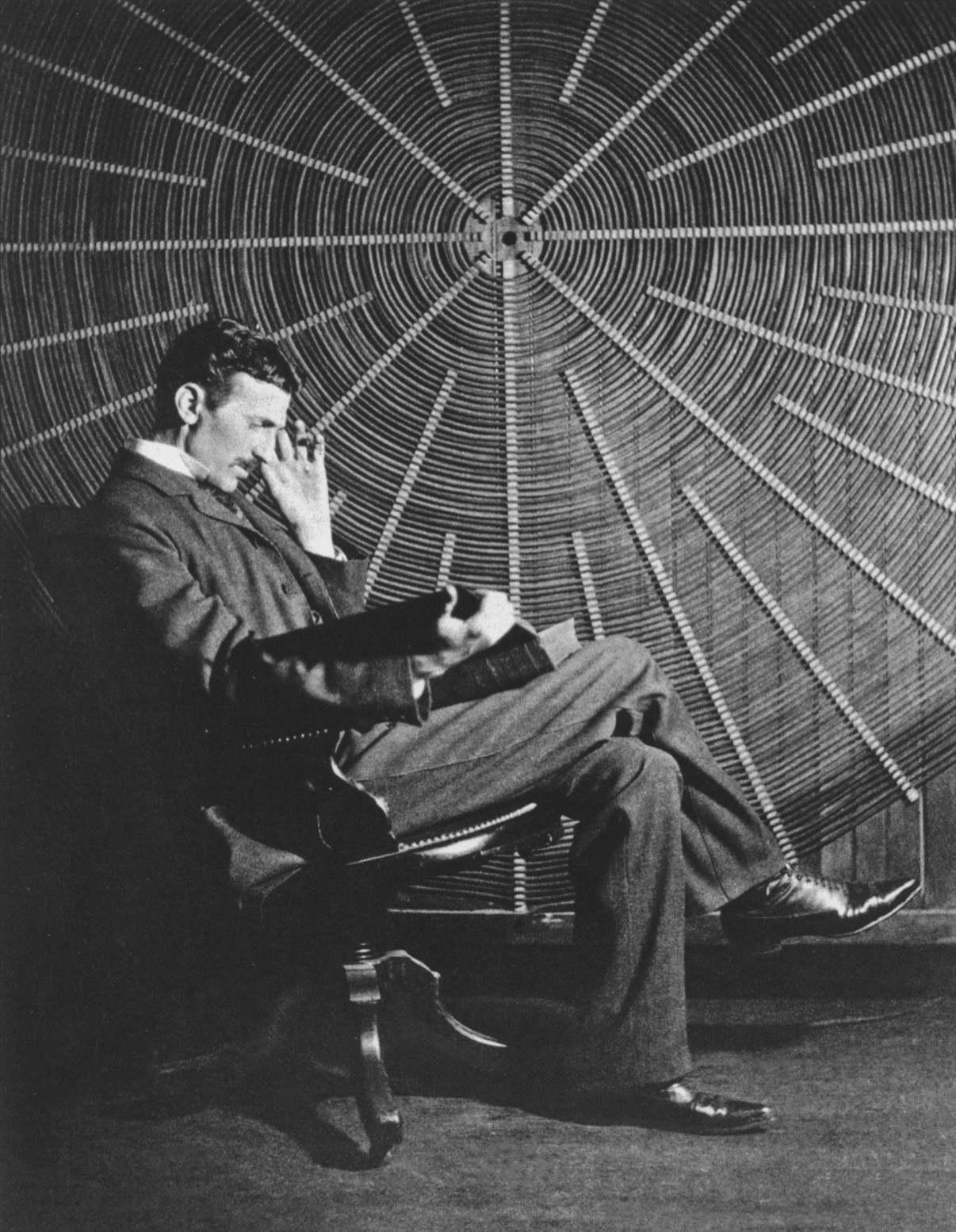
While Edison and Dalí focused on interrupting the hypnagogic state to extract ideas, Nikola Tesla, perhaps the most visionary of them all, mastered the art of working within it. From a young age, Tesla developed an extraordinary capacity for vivid, controlled visualization, a skill he honed for hours on end, particularly in the relaxed, pre-sleep state.
He claimed to be able to design, build, test, and refine his most complex inventions, including the revolutionary alternating current motor, entirely within the theater of his mind. He would see them running, solid and real, allowing him to identify flaws and make improvements before ever creating a physical drawing or model.
This intense mental rehearsal, often conducted while in the relaxed state bordering sleep, tapped directly into the hallucinatory, image-rich nature of hypnagogia. It allowed him to access a level of insight and clarity that was hidden from the constraints of ordinary waking thought. He didn't need a falling object to capture his ideas, because he had trained his mind to remain lucid and functional within the creative space itself. He had, in essence, learned to become the master of his own waking dream.
The Genius Protocol
These titans of creativity were not just lucky; they were methodical. Their seemingly quirky habits were, in fact, sophisticated protocols containing the three core elements of any modern biohacking system:
- A Clear Intention: A specific problem to solve or a creative well to draw from.
- A Mechanism to Induce the Target State: Relaxation in a specific physical posture designed to encourage the onset of sleep.
- A Bio-Feedback and Interruption System: The falling object, or in Tesla's case, a highly trained mental focus.
They engineered the conditions for inspiration. This historical precedent elevates their stories from amusing anecdotes to pioneering examples of a scientific method. It frames our modern digital protocols as the direct technological successors to the steel ball and the key—a more precise, reliable, and accessible way to achieve what was once the secret of genius. The tools have changed, but the timeless truth remains: the answers we seek are often waiting just on the other side of wakefulness.