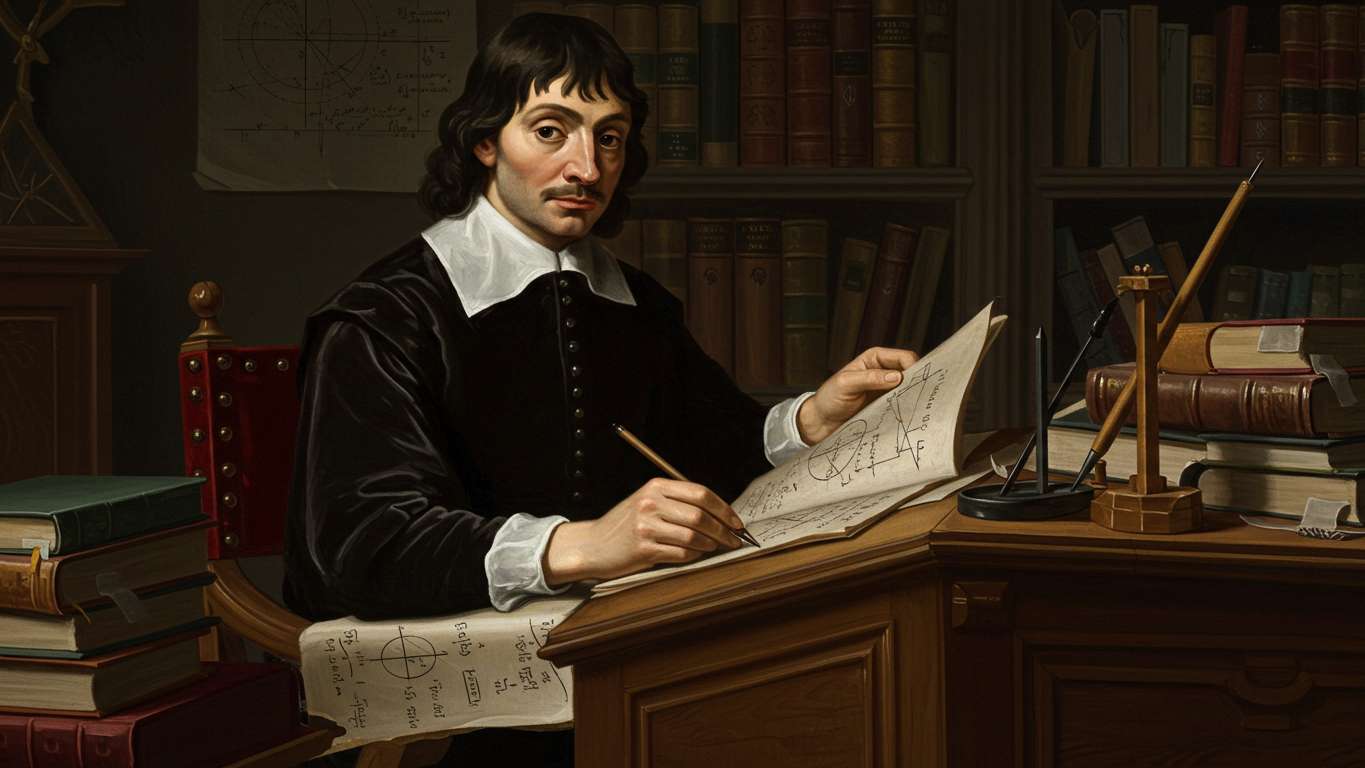
In the long history of human thought, few phrases have echoed with such profound simplicity as “I think, therefore I am.” Uttered by the 17th-century philosopher René Descartes, these five words were a revolution, a stake driven into the ground of uncertainty that has anchored our understanding of consciousness ever since. It feels intuitive, almost obvious. Of course, the act of thinking proves your existence.
But what if Descartes only told half the story? What if the statement isn't just a passive proof of existence, but an active formula for creation? We now stand at a fascinating intersection of ancient philosophy and modern neuroscience, and the evidence is becoming undeniable. The act of thinking doesn't just prove you exist; it actively shapes the reality you experience. Your thoughts are not just observations; they are the architects of your life, and every night, as you drift to sleep, you are giving them the power to build your world.
The Quest for Unshakable Certainty
To grasp the power of Descartes' statement, you have to understand the world he lived in. It was an age of radical doubt. Scientific discoveries were overturning centuries of dogma, and the very foundations of knowledge seemed to be crumbling. Descartes, a brilliant mathematician and philosopher, embarked on a quest for one, single, irrefutable truth upon which he could build a new system of knowledge.
He decided to doubt everything. He doubted his senses, which could be deceived by illusions. He doubted the physical world, which could be a complex dream. He even imagined an evil demon dedicated to tricking him at every turn. But in this ocean of doubt, he found a lifeboat. He realized that even if he was being deceived, even if everything he perceived was false, he had to exist to be deceived. The very act of doubting was an act of thinking. And if he was thinking, a "thinker" must exist. Cogito, ergo sum. I think, therefore I am. It was the one thing he could not possibly doubt.
For Descartes, this was the bedrock of existence. But he saw thought as the proof, not the cause. He couldn't have imagined that centuries later, science would reveal that this "thinking self" is not a static entity but a dynamic, creative force.
The Brain That Rewires Itself
Fast forward to the 21st century. We have tools Descartes could never have dreamed of. With functional magnetic resonance imaging (fMRI), we can watch the brain in action, seeing thoughts light up neural pathways like electricity through a city grid. And one of the most stunning discoveries of modern neuroscience is the principle of neuroplasticity.
For centuries, it was believed that the adult brain was a fixed, unchangeable machine. We now know this is profoundly untrue. The brain is constantly reorganizing itself, forming new neural connections and pruning old ones, based on our experiences, behaviors, and, most importantly, our thoughts. A groundbreaking study published in the Journal of Neuroscience demonstrated that something as simple as practicing a five-finger piano exercise physically changed the structure of the motor cortex. The participants didn't just learn a new skill; their thoughts and actions physically rewired their brains.
Every time you entertain a thought, you are encouraging a specific neural circuit. A thought of gratitude strengthens the pathways associated with positivity. A recurring worry carves a deeper groove for anxiety. You are, quite literally, sculpting the organ that perceives and interprets your world. You are not just thinking; you are building the thinker.
The Architect and the Construction Crew
Think of your conscious mind as the architect. It's where you set your intentions, where you focus your attention, and where you hold your dominant beliefs about the world. When you consciously choose to focus on opportunity, you are drawing up a blueprint for a reality filled with potential. When you fixate on past grievances, you are drafting a plan for a life of resentment.
But an architect only draws the plans. The real work is done by the construction crew. Your subconscious mind is that crew. It is the vast, powerful, and silent workforce that takes the blueprints from your conscious mind and works tirelessly, 24/7, to build that reality. It governs your automatic behaviors, your emotional reactions, your habits, and the subtle ways you filter information from the world around you. It doesn't question the blueprints; it just builds what it's given.
This is why "positive thinking" alone can sometimes feel hollow. You can stand in front of a mirror repeating affirmations (the conscious architect drawing a new plan), but if your subconscious (the crew) has been working from an old, negative blueprint for decades, its ingrained patterns will often overpower your conscious efforts. To truly change your reality, you need to deliver the new blueprints to the crew in a way they can understand and accept.
The Hypnagogic Gateway: Handing Over the Blueprints
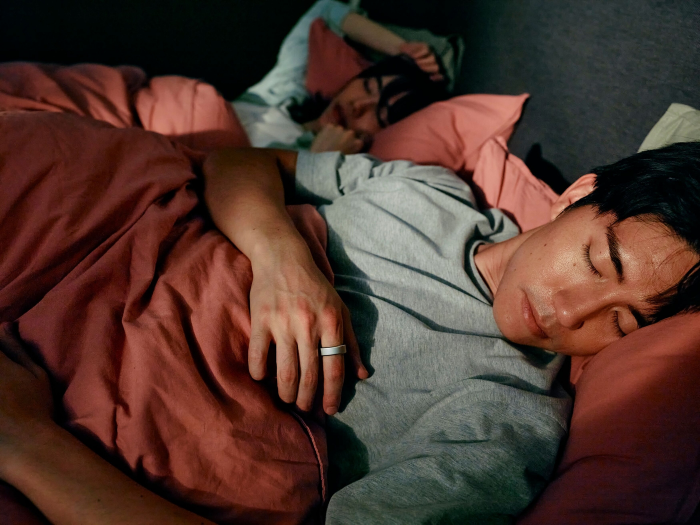
This is where we return to the mysterious and powerful state you enter every single night. The hypnagogic state, that magical threshold between wakefulness and sleep, is the moment of handover. It is the nightly meeting between the architect and the construction crew.
As you drift off to sleep, the logical, critical part of your conscious mind goes offline. The gates to the subconscious swing open. The thoughts, feelings, and emotions swirling in your mind at that moment are not just fleeting sensations; they are the final, approved blueprints being delivered to the crew for overnight construction.
If you fall asleep replaying an argument, marinating in anxiety about tomorrow, or feeling a sense of lack, you are handing your subconscious a work order to build more conflict, more worry, and more scarcity into your life. Your subconscious doesn't judge. It simply receives the emotional and mental instructions and begins to alter your perceptions and behaviors to match. You wake up with the structure already built, more prone to notice things to be anxious about, more likely to fall into the same patterns of conflict.
Conversely, if you consciously guide your thoughts as you fall asleep, if you focus on feelings of gratitude, visualize your goals as already accomplished, or feel the peace of a resolved conflict, you are delivering a powerful, positive blueprint. You are instructing the vast resources of your subconscious to build a reality of abundance, success, and connection. You are using this suggestible state to program the automatic patterns that will govern your waking life.
From Proof to Power
Descartes gave us the certainty of our own existence. "I think, therefore I am." It was the starting point. But modern science has given us the instruction manual. We now understand that the sentence can be read not just as a proof, but as a process.
I think… and therefore I build the neural pathways that define my mind. I think… and therefore I hand blueprints to my subconscious. I think… and therefore I create the reality I experience.
You are not a passive observer in a fixed universe. You are a thinking being, and that very act of thought is a creative force of unimaginable power. The legacy of your days is written in the thoughts you hold as you surrender to the night. Choose them wisely.